
-
Into the frame: Exploring Vietnam through film
Vietnam’s breathtaking landscapes have evolved from hidden gems into sought-after settings for international filmmakers. Beyond its rich heritage, vibrant cities and world-renowned cuisine, the country offers a cinematic diversity rarely found in one destination, from towering limestone karsts and emerald-green bays to ancient towns, tropical waterways and vast underground caves.
For travellers, film tourism offers a different way to discover Vietnam: not simply by watching the country on screen, but by stepping directly into the landscapes, cultures and flavours that have inspired filmmakers from around the world.
Here are some of Vietnam’s most memorable cinematic destinations and the experiences that bring them to life.

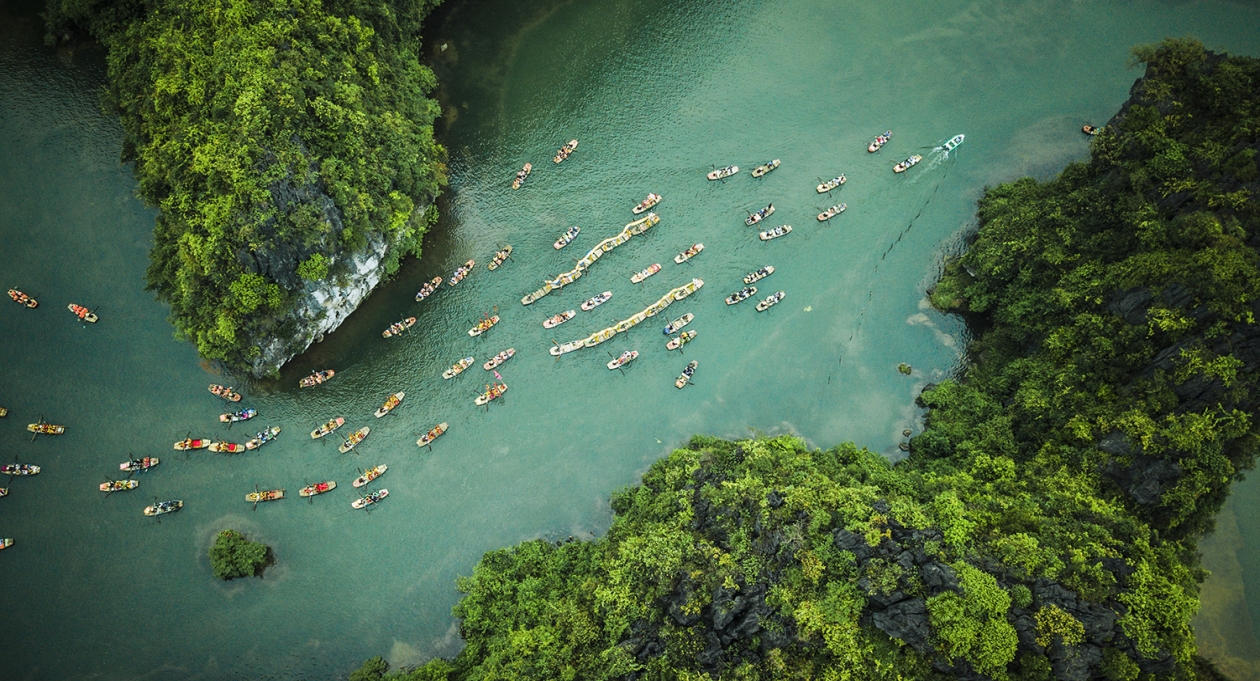
Trang An, Ninh Binh (Photo: [email protected])
Iconic Cinematic Destinations
Ha Long Bay & Ninh Binh - Kong: Skull Island
The spectacular landscapes of Vietnam provided the mythical setting for Kong: Skull Island, directed by Jordan Vogt-Roberts. The film showcased the country’s dramatic limestone karsts, misty mountains and tranquil waterways, bringing an otherworldly vision of King Kong’s homeland to the big screen.

Ha Long Bay (Photo: Dinh Huu Ngot)
In Ha Long Bay, a UNESCO World Heritage Site, travellers can cruise among thousands of limestone islands and islets rising dramatically from the emerald waters. Overnight cruises, kayaking, cave exploration and sunset viewing offer opportunities to experience the scenery from different perspectives.
Further inland, Ninh Binh offers an equally cinematic landscape. At the Trang An Scenic Landscape Complex, visitors can travel by traditional sampan through a maze of waterways, limestone cliffs and caves, landscapes that featured prominently in Kong: Skull Island. Cycling through rice fields, visiting ancient temples and exploring the former imperial capital of Hoa Lu add cultural depth to the experience.
The journey is also an invitation to discover the flavours of northern Vietnam. Local specialties include goat meat from Ninh Binh, crispy rice and freshwater dishes, while Ha Long Bay is renowned for fresh seafood such as squid, prawns and oysters.
Son Doong Cave & Phong Nha - Pan
Deep in the mountains of central Vietnam lies Son Doong, widely recognized as the world’s largest known cave passage by volume. Located within Phong Nha-Ke Bang National Park, a UNESCO World Heritage Site, its immense chambers, underground river and unique ecosystem seem to belong to a fantasy world.

Son Doong Cave (Photo: [email protected])
Aerial footage of Son Doong was used in Warner Bros.’ Pan to help create the magical world of Neverland. Although the cave itself is accessible only through a highly controlled expedition, the wider Phong Nha destination offers a range of adventure experiences for visitors.
Travelers can explore Phong Nha Cave by boat, venture into Paradise Cave, trek through forests and valleys, or take part in guided cave and jungle adventures. For experienced adventurers, multi-day expeditions offer the chance to camp deep inside the spectacular cave environment.
The region’s culinary identity is equally distinctive. Visitors can sample central Vietnamese specialties such as bánh bột lọc (boiled tapioca cake stuffed with pork, mushroom), grilled dishes and local river and mountain produce. Together, adventure tourism, nature-based experiences and local cuisine make Phong Nha a destination where the cinematic imagination meets genuine wilderness.
Ho Chi Minh City & the Mekong Delta - The Lover
Vietnam’s southern landscape provides a completely different cinematic atmosphere. Jean-Jacques Annaud’s The Lover, the 1992 adaptation of Marguerite Duras’s celebrated novel, captures the atmospheric character of French Indochina and the waterways of southern Vietnam.
In Ho Chi Minh City, travellers can explore the historic streets of Chợ Lớn, where traditional temples, markets, shophouses and busy streets reveal layers of the Hoa ethnicity-Vietnamese cultural heritage. The city’s architectural landmarks and lively café culture offer another perspective on the cinematic Saigon of the past.

Visitors making traditional cake in Mekong Delta (Photo: [email protected])
The journey can continue south to Sa Dec, a charming Mekong Delta town associated with the story behind The Lover. The Huynh Thuy Le Ancient House, with its distinctive blend of Vietnamese, Chinese and French architectural influences, provides a tangible connection to the era portrayed in the film.
For a fuller Mekong Delta experience, visitors can cruise along narrow canals, visit fruit orchards, discover traditional craft villages and experience local life along the river. Regional specialties include hủ tiếu (tapioca rice noodles), fresh tropical fruits, coconut-based sweets and a wide variety of freshwater fish and seafood.
Hanoi, Hue & Ha Long Bay - Indochine
The Oscar-winning French epic Indochine, starring Catherine Deneuve, brought Vietnam’s landscapes and colonial-era atmosphere to an international audience. The film was shot extensively in Vietnam, featuring locations including Hanoi, Hue and Ha Long Bay.
In Hanoi, travelers can explore the atmospheric Old Quarter, where narrow streets, historic architecture, traditional shops and street food create a distinctive urban experience. A walk around Hoan Kiem Lake, a visit to the Temple of Literature - Quoc Tu Giam and an evening enjoying a traditional water puppet performance provide glimpses into the capital’s cultural heritage.

Hoan Kiem Lake, Hanoi (Photo: [email protected])
The journey south to Hue, the former imperial capital, reveals another chapter of Vietnam’s history. The Complex of Hue Monuments, including the Imperial Citadel and royal tombs, reflects the grandeur of the Nguyen Dynasty. Visitors can combine heritage sightseeing with a leisurely cruise along the Perfume River and savour specialties such as Hue spicy beef noodle soup, beo cake, nam cake and crispy pancake.
Meanwhile, Ha Long Bay offers the opportunity to experience the dramatic seascapes that made Vietnam such a compelling backdrop for international cinema.

Hue Imperial Citadel, once a home to the royal family of Nguyen dynasty (Photo: [email protected])
Beyond the screen: Vietnam as a living film set
Vietnam’s cinematic appeal extends far beyond the locations featured in individual films. Its compact yet remarkably diverse geography allows travelers to move from bustling urban centers to tranquil rice fields, tropical islands, ancient towns and dramatic mountain landscapes within a single journey.
In Hoi An, the lantern-lit Ancient Town, riverside streets and traditional architecture provide an atmospheric setting for exploring Vietnam’s heritage. Visitors can combine walking tours with bicycle rides through surrounding villages, cooking classes and experiences focused on local crafts and cuisine.
In Quang Tri, adventure seekers can combine cave exploration with trekking and nature-based experiences. In Ninh Binh, boat journeys and cycling routes reveal a landscape where culture and nature exist side by side. In the Mekong Delta, river cruises, homestays and visits to local markets provide an intimate look at everyday life.
And in Vietnam’s cities, food itself can become part of the cinematic experience. From a steaming bowl of Pho in Hanoi and fragrant Hue spicy beef noodle soup to broken rice in Ho Chi Minh City and fresh tropical fruits in the Mekong Delta, each region offers its own culinary story.

Hoi An Ancient Town (Photo: [email protected])
Plan your own cinematic journey
A film-inspired trip through Vietnam can be designed as a journey across landscapes, cultures and flavours: cruise through the karst islands of Ha Long Bay, row beneath the limestone mountains of Trang An, venture into the caves of Phong Nha, explore the historic streets of Hanoi and Ho Chi Minh City, discover the imperial heritage of Hue, and slow down along the waterways of the Mekong Delta.
The screen may provide the first glimpse, but Vietnam’s landscapes, heritage, people and cuisine offer something that cinema cannot fully capture: the experience of being there.


