
-
Discover the Kingdom of Caves in Central Vietnam
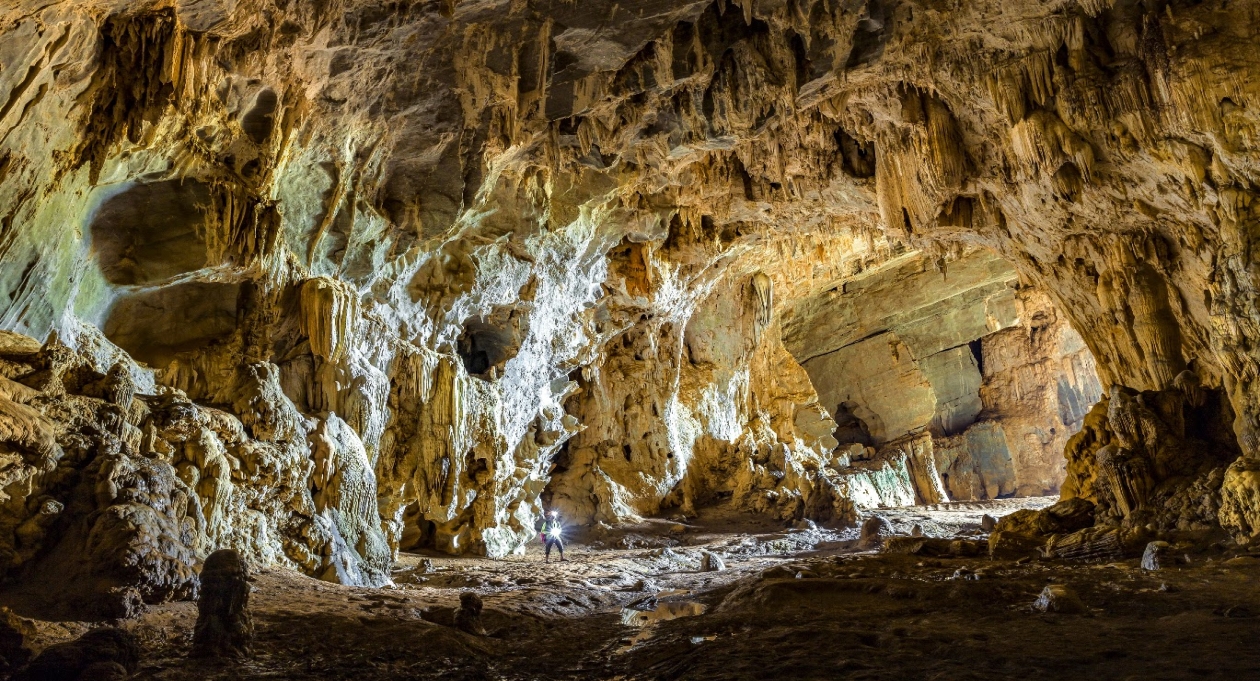
Deep in the heart of Central Vietnam lies a subterranean world so vast it generates its own localized weather systems, complete with internal fog, pristine jungle ecosystems, and underground rivers carved through hundreds of millions of years of limestone. Welcome to Phong Nha-Ke Bang National Park, the "Kingdom of caves" and the planet's ultimate frontier for high-adrenaline exploration.

A whole new world underground (Photo: Nguyen Van Hai)
Subterranean Titans: Where wonders dwell beneath the earth
Recognized as a UNESCO World Heritage site, Phong Nha-Ke Bang guards one of the oldest karst formations in Asia, dating back over 400 million years. Beneath its emerald jungle canopy rests an intricate web of hundreds of caverns, each boasting mind-boggling scale and otherworldly geology:
- Son Doong Cave (Mountain River Cave): The undisputed titan of global speleology. As the world’s largest cave, Son Doong is vast enough to fit an entire 40-story city block inside its main cavern. Stepping inside feels less like exploring Earth and more like discovering a lost world from a sci-fi novel.
- En Cave: The world's third-largest cave, famous for its colossal entrance arch that opens onto an internal natural beach inside the cavern, illuminated by beams of golden sunlight.
- Thien Duong Cave (Paradise Cave): Stretching over 31 kilometres, this cave lives up to its name with towering stalagmites and subterranean stone "cathedrals" that leave travelers in absolute awe.
- The Tu Lan & Va Cave Systems: Crafted for die-hard thrill-seekers, these technical networks demand river swimming, scaling limestone walls, and navigating passages filled with rare "cave pearls."

En Cave (Photo: Luk Ban La)

Paradise Cave (Photo: [email protected])
An untamed adventure playground
Calling this region the world’s adventure capital isn't hyperbole, it's a promise. Beyond the cave portals, the surrounding national park offers high-octane immersion into nature:
- Multi-Day expeditions: Jungle trekking through thick ancient rainforests, scaling jagged karst peaks, and hammocking under starry skies inside gargantuan cave entrances.
- Wild waterways: Kayaking along the jade-green Son River, paddleboarding through pitch-black subterranean streams, and zip-lining over turquoise karst springs.
- Cultural immersion: Expeditions offer authentic connections with local indigenous communities, such as the Bru-Van Kieu people, who have navigated these forests for generations.

Tu Lan Cave (Photo: Thanh Vuong)
Conservation first: A global model for sustainable travel
What makes Central Vietnam's cave kingdom truly extraordinary is its uncompromising commitment to low-impact, sustainable tourism. Strict visitor caps are enforced for instance, only a small, limited number of explorers are granted permits to enter Son Doong each year to protect its fragile ecosystem.
When you step into these caverns, you aren't just taking a tour, you are participating in one of the most successful community-led conservation models in Southeast Asia.
Local guides, safety experts, and porters from nearby villages lead every trek, transforming former hunters and loggers into world-class conservation advocates and expedition leaders.
Practical tips for your journey
- Best time to visit: March to August brings dry, warm weather and ideal water levels for caving, trekking, and river swimming.
- Gateway access: Fly or take a train into Dong Hoi, located just a 45-minute drive from the national park's hub.
- Book early: Multi-day cave expeditions (especially En and Son Doong caves) often fill up months or even a year in advance.
- Packing essentials: Bring well-broken-in, quick-draining trail running shoes, moisture-wicking clothes, and a heart ready for the journey of a lifetime.


